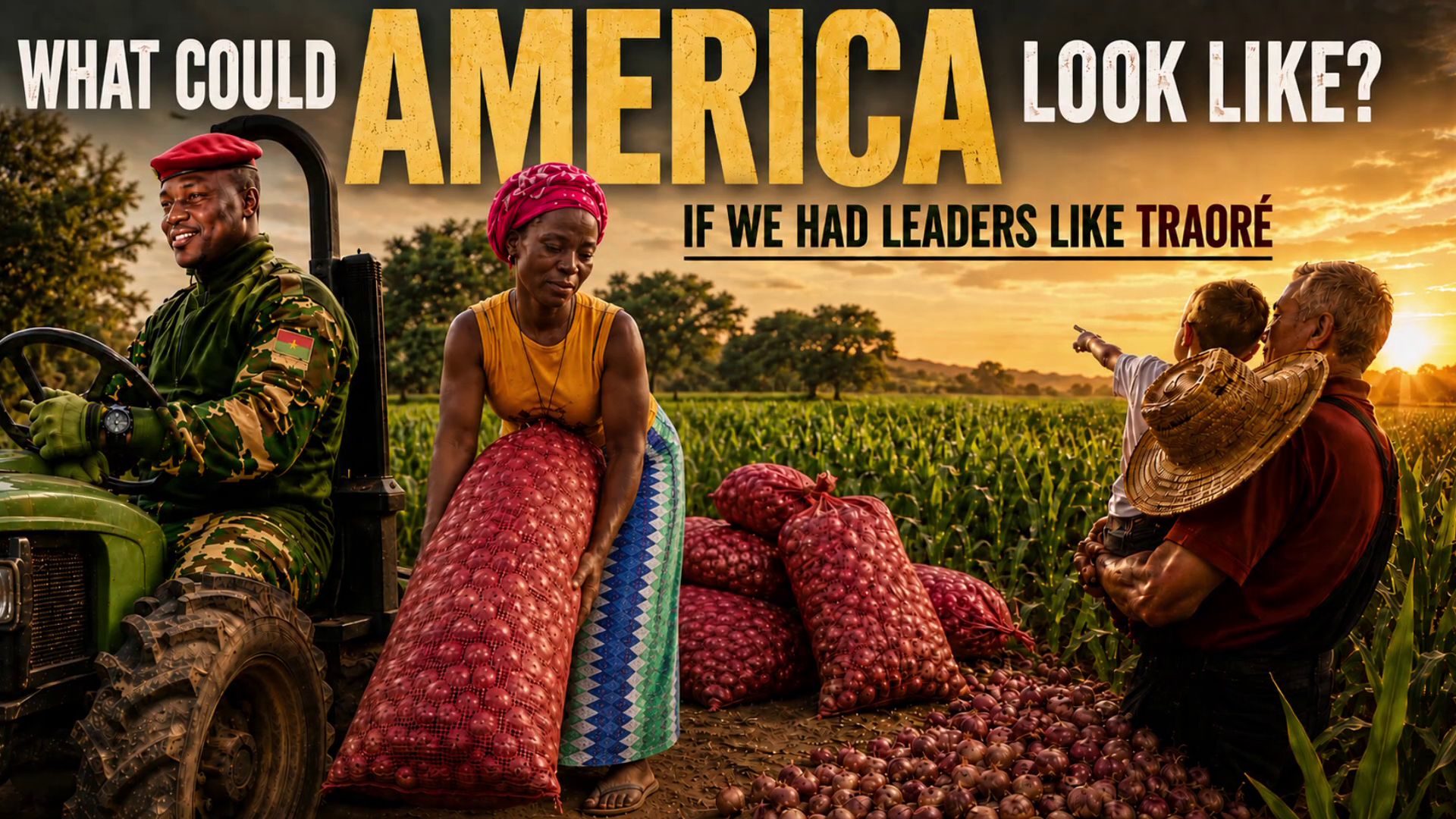
What could AMERICA look like if we had leaders like Traoré?
By Penny Arcos
What if the primary export of the United States was not war, sanctions, and economic destabilization, but mutual development and real productivity?
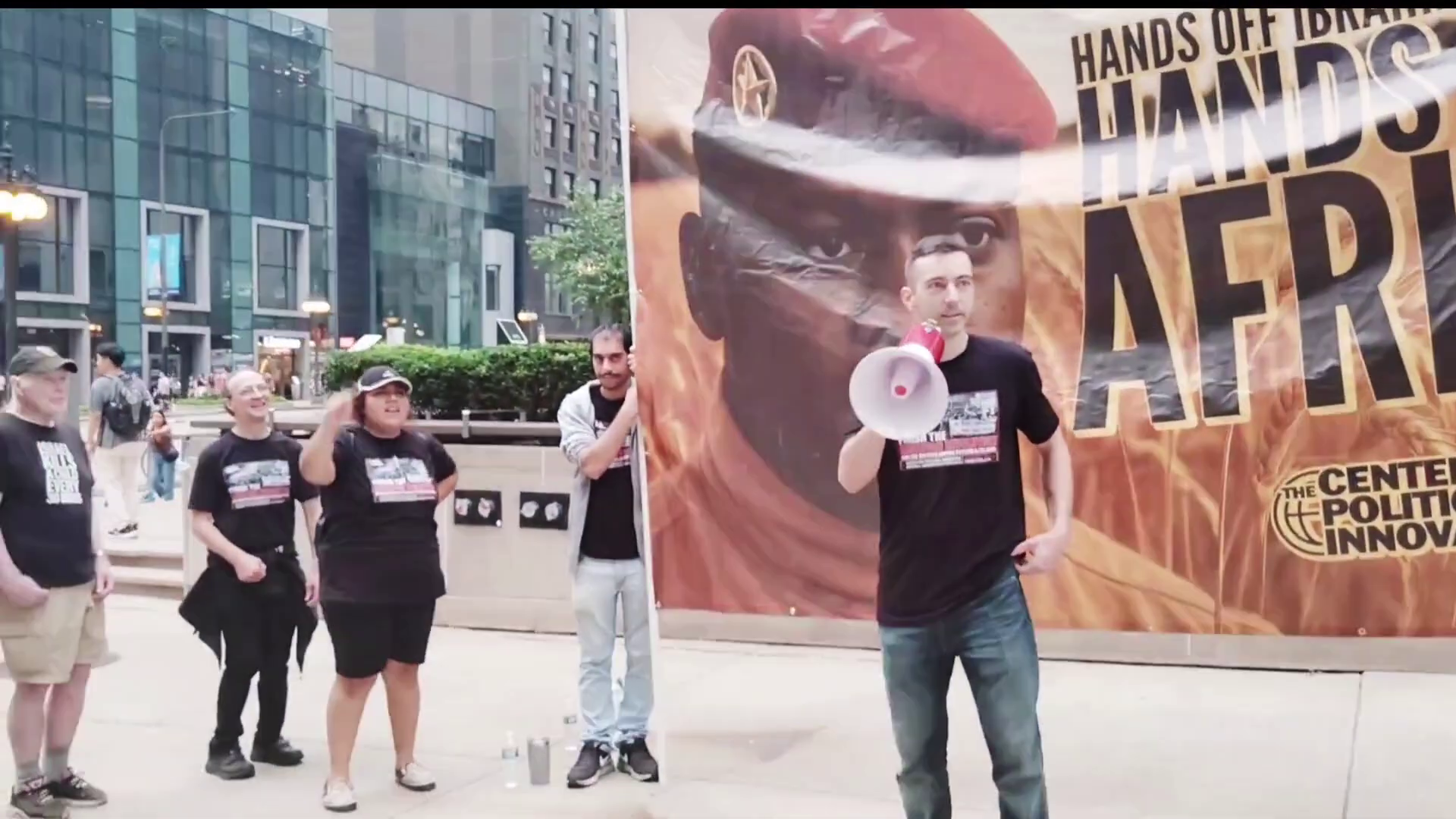
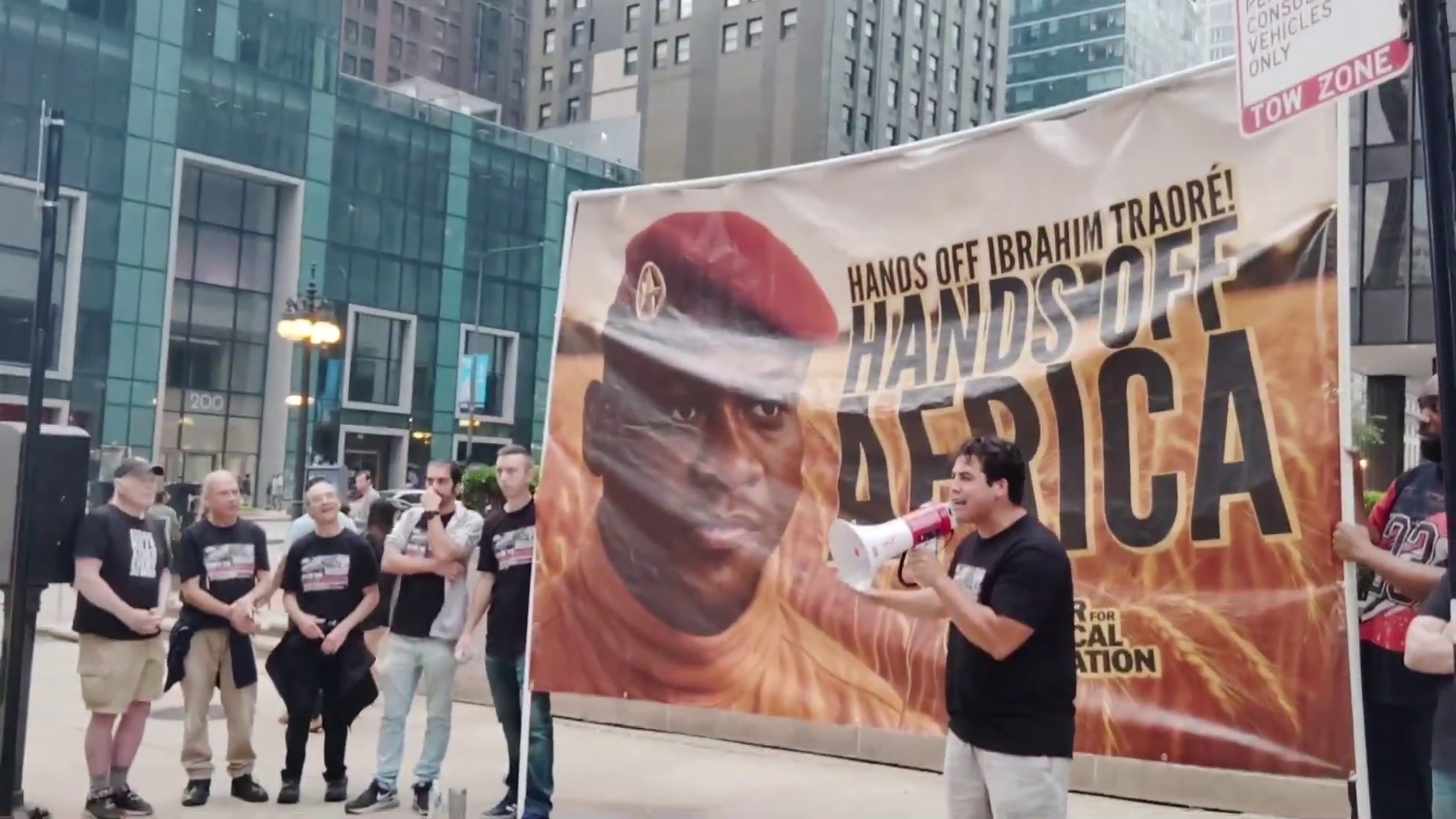
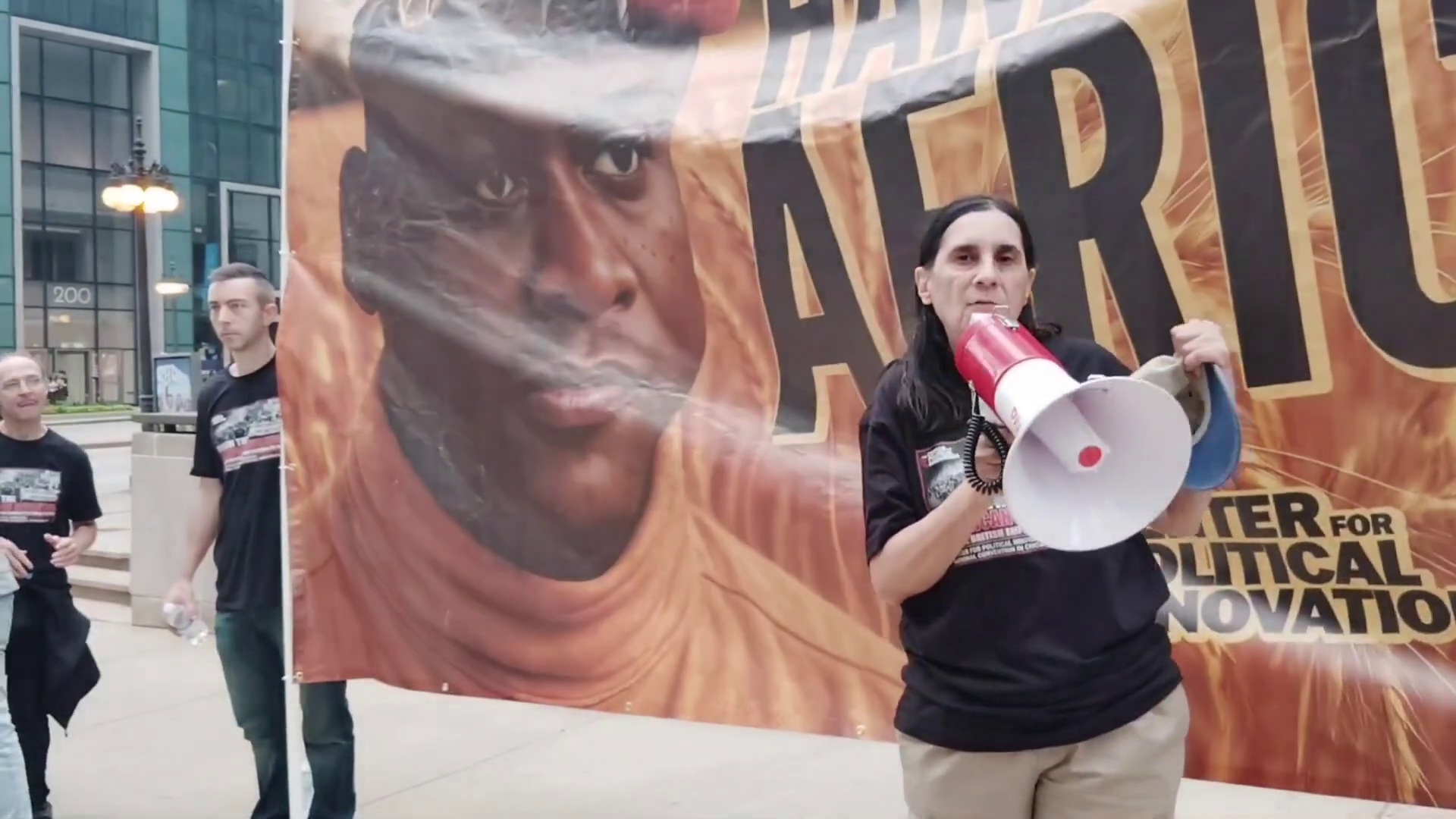
Across the American heartland, working families are told that economic decay, plummeting crop prices, and community foreclosures are inevitable realities of a global market. But a different path exists. This was the vision shared by the Center for Political Innovation outside the French Embassy in Chicago.
Around the world, courageous anti-imperialist leaders are transforming their nations by breaking free from the domination of Wall Street and London. By nationalizing resources to serve the people, they are investing in agriculture, infrastructure, healthcare, and education—even turning prisoners into productive farmers.
In West Africa, Burkina Faso and the Alliance of Sahel States have expelled French troops and American bases, building their own armies to defend their land against the terrorism funded by a desperate colonial apparatus. At the Chicago rally, activists made the message clear:
“France out of Africa! Long live Ibrahim Traoré!”
— Paul Greene
“Two hundred and fifty years ago, the United States showed the world how to free itself from colonialists. Today, President Ibrahim Traoré is showing us how to free ourselves... America needs a president like Ibrahim Traoré.”
— John McCarthy
Traoré, who took power in 2023 to combat the Sahel's terrorism crisis, is leading a Progressive and Popular Revolution. He maintains that true sovereignty requires a disciplined population that produces what it consumes.
We see this sovereignty in action through Burkina Faso's cotton industry. Recently, the government nationalized SOFITEX to rescue it from long-standing financial difficulties and secure the livelihoods of over 3 million citizens. Women, who traditionally had no land rights, work in farming cooperatives. Because cotton and wheat rely on alternating planting cycles, safeguarding cotton protects the entire agricultural ecosystem.
“Cotton is WHITE GOLD!” activist Penny Arcos exclaims. Burkina Faso weaves its own biodegradable fabric, Faso Dan Fani, requiring all government institutions and the military to wear locally produced textiles. Similarly, state funds revived SO.FA.CO-B, the nation’s first medical-grade hydrophilic cotton plant, after a three-year closure forced by foreign competition and high energy costs. Traoré framed the revival as a crucial pillar of "health emancipation."
What would America look like if our leaders followed this example?
In 2025, Arkansas farm bankruptcies doubled, reaching the highest number of Chapter 12 filings since the turn of the century. As family farms vanish, small towns hollow out and grocery prices spike. Instead of funding endless wars or filling for-profit prisons for cheap corporate labor, our resources could be deployed at home.
While researchers at Southern Illinois University engineer microbes to transform plastic and agricultural waste into nutrients, the broader academic system remains trapped in Malthusian doctrines of "degrowth." Imagine if our universities were funded to teach sustainable, high-yield agriculture instead.
Imagine an alternate reality across the American heartland:
The early morning sun cuts through the Arkansas fog, lighting up a field where a brand-new tractor is already at work. For generations, this time of year meant stomach-churning panic over Wall Street commodity prices and the threat of the auction block. But today, the crushing corporate debt that broke the neighbor's farm is gone, erased by a government that puts working families ahead of predatory banks. A farmer steps off the porch, looking out at a field of white-gold cotton, knowing the price is guaranteed by a public grain reserve and the land will belong to his grandkids.
Down on Main Street, the quiet, boarded-up ghost town is gone. The bell above the bakery door jingles constantly, and the local diner is packed with folks discussing the new regional hospital and high school expansion. In the window of a local boutique, bolts of hand-woven Faso Dan Fani fabric from Burkina Faso capture the light. It is imported directly from African cooperatives in exchange for American-made precision tools. Local seamstresses are already busy turning the vibrant fabric into clothing, proud to live in a town that is finally building, growing, and trading on its own terms.
As Caleb Maupin of the Center for Political Innovation explains: “Human beings are unique and special, and it is our ability to innovate that defines us. We need a leadership that sees the beauty of what human beings are capable of doing, and will actively work to utilize that ability.”
“We need a government of action that fights for working people,” Gary Blatz declares. “Check out the Center for Political Innovation. Get involved. Take action. Do something, because it's your future!”