Innovationists join Pan-African TV Program
The Center for Political Innovation joined journalist and TV Presenter Clarisse Wiydorven of Pan African Media TV and a panel of experts on Global Insights to discuss the trajectory of African liberation led by the Alliance of Sahel States (AES). The program was broadcast in the African nation of Cameroon.
The leaders of Mali, Niger and Burkina Faso have set a new trajectory for the African continent. Their mission is to see the total liberation of the African continent and the sovereignty of each State.
For decades the resource-rich Sahel region has suffered tremendously through NATO-backed operations. The alliance has expelled the former colonial powers and their military forces that have occupied the region for decades. As a military and economic bloc, the AES is overcoming security crises and overturning six decades of French colonial dominance. This revolution is not just on the African continent, but beyond.
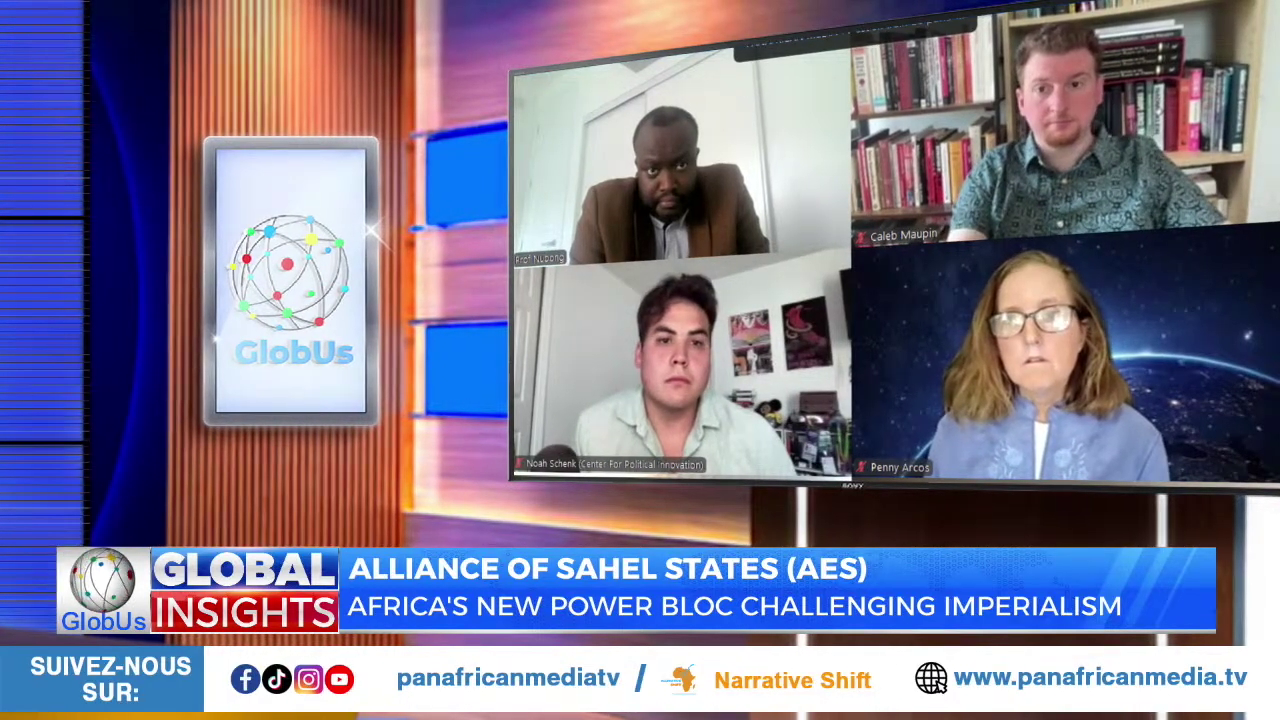
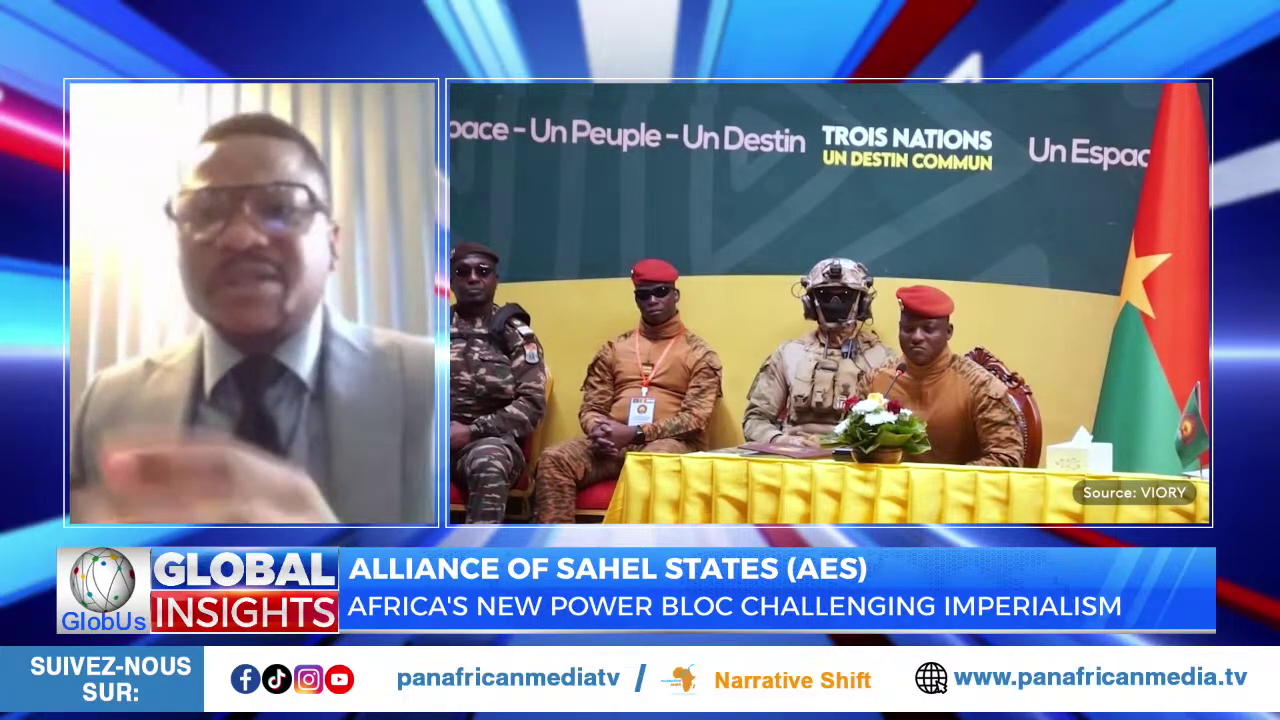
Dr. Mba Ukweni, a Geopolitics and Strategic Studies Expert, explained that the three-state Confederation has formed a military pact to challenge Western Imperialism. But he asked if human rights are protected. Is there Democracy? Will they simply replace the former Colonial powers with other Imperial powers?
Caleb Maupin, co-founder of The Center for Political Innovation, clarified the definition and role of Imperialism in the world. He defined Imperialism/Globalism as an economic system run by Wall Street and London that keeps the world poor to enrich themselves. He referred to the work of Kwameh Nkruma and other ant–colonial fighters in history who understood this concept. Big banks and monopolies prevent development nations as impoverished captive markets and client states.
Maupin praised Burkina Faso and the AES as a pro-Growth government that is focused on raising the people out of poverty while fighting the terrorism inflicted upon their region by the Imperialist powers. He compared this to America, where our living standards and life expectancy is decreasing because our leaders are committed to upholding this international system. Maupin explained that the only hope America has is to join the rising new economy with Russia and China and the Sahel States to trade with countries on the basis of win-win cooperation.
Maupin explained that our job is to educate the public that Iran is not our enemy. Nor are African leaders or Cuba or Venezuela. Our enemy is Wall Street.
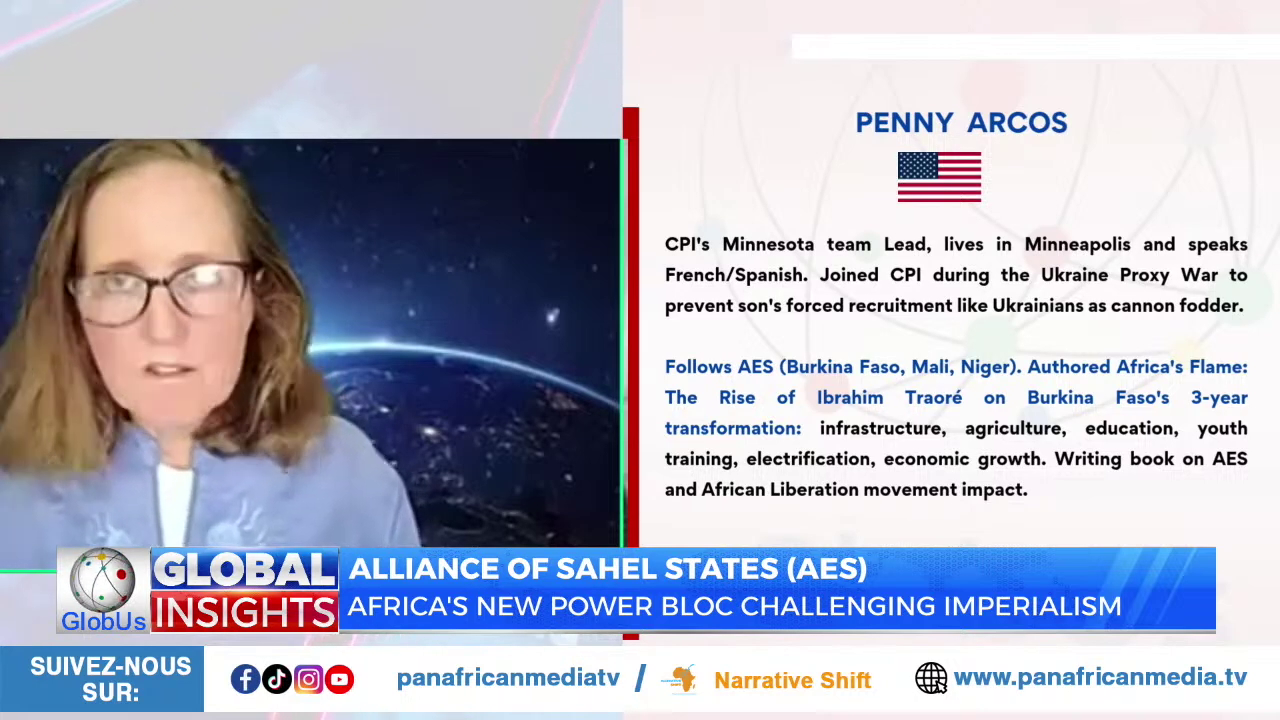
Wiydorven asked Penny Arcos how she sees the Alliance of Sahel States as a bloc challenging Globalism/Imperialism.
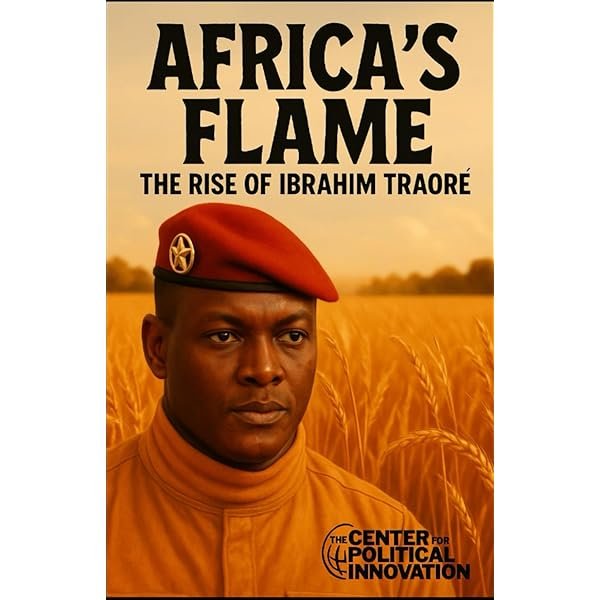
Penny Arcos, author of Africa’s Flame: The Rise of Ibrahim Traoré, shared from her research examples of the government revising mining codes to better serve their people, despite pushback from giant corporations like Barrick Gold. She shared examples of industrialization to support food security in Burkina Faso such as three tomato processing facilities that can process 100,000 tonnes of tomatoes daily. “They’re feeding their people and they're raising them out of poverty. They're investing in entrepreneurship as well. So, freedom is about economic development not just whatever you feel like in the moment”
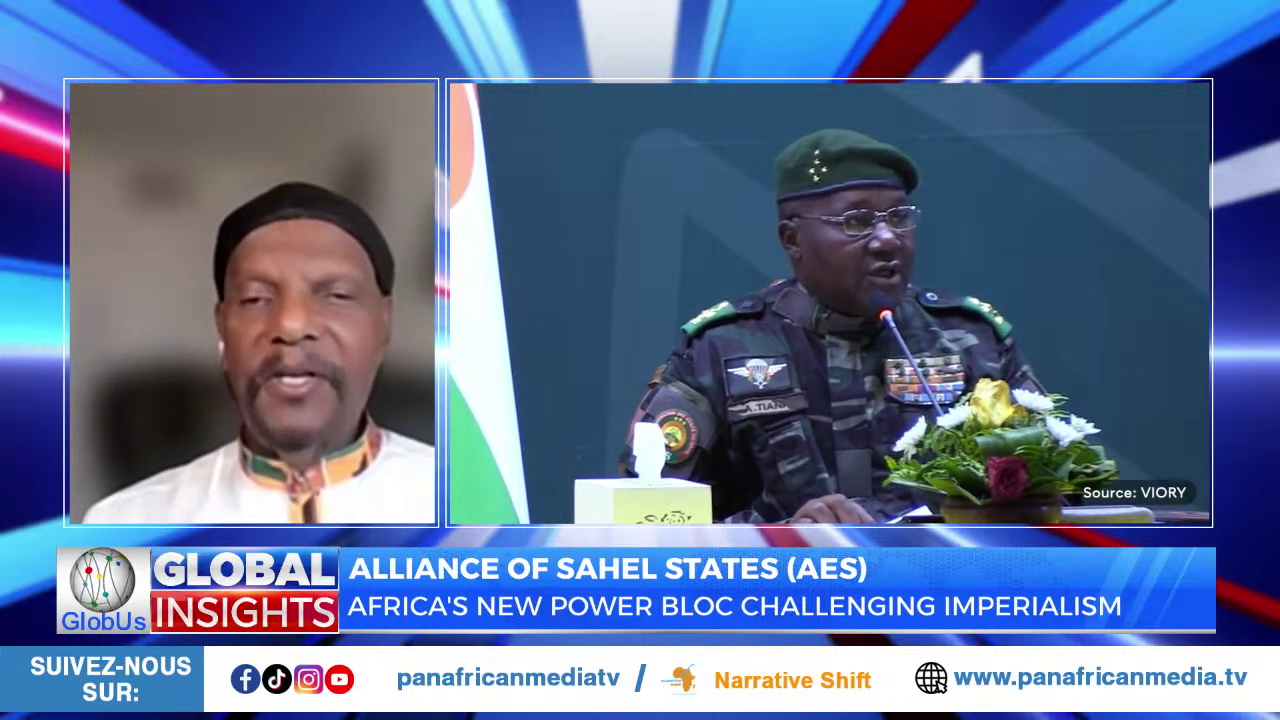
Regarding the recent large-scale attacks on Mali, Ukweni stated that the biggest enemy of Africa is Balkanization. Even after independence in 1960, the French returned to cut off Mali from access to the ocean and to make Senegal an independent country. He emphasized that Africa must unite as one continent to be able to negotiate with superpowers such as China. He lauded the AES as an example of this unification.
Wiydorven asked if the Alliance would be able to completely overthrow Western dominance.
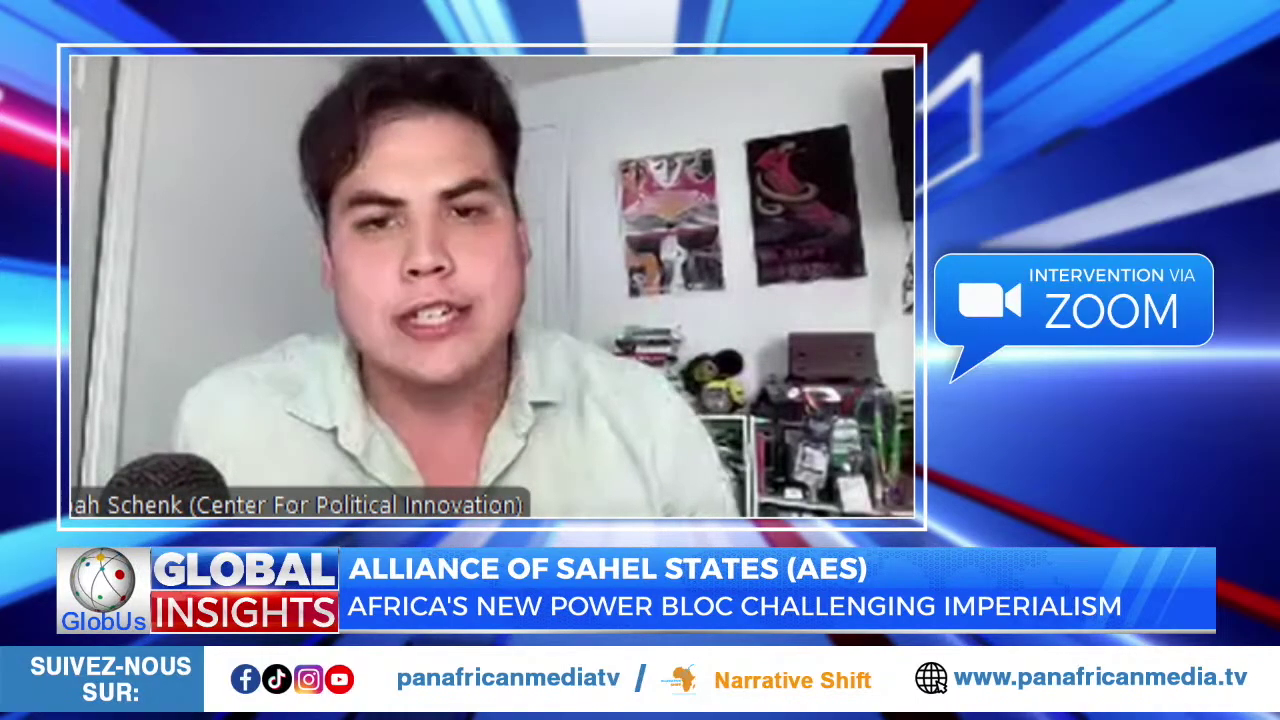
Noah Schenck, a member of CPI, an author and a journalist, praised the Sahel Alliance, explaining that they were carrying on the legacy of Robert Mugabe in Zimbabwe, Isabel Dos Santos in Angola, Mumar Gaddafi in Libya and of Thomas Sankara in Burkina Faso, The Land of Upright Men. They kicked out the military contractors that were spreading terrorism across the country. Noah also explained the role of French colonialism in the world, referring to how French Colonialism kept Haiti and Vietnam from developing.
Professor Gabila Nubong, a Researcher and Political Economist, was confident that the Alliance of Sahel States is strong enough to stand up against the Imperial powers by building infrastructure and by investing in healthcare and education. “Do well by your people. Make sure that you keep their interest at the very heart of it. Try and combat the evils and the challenges of poor governance and corruption and you build the sort of strengthening mechanism that the revolution takes to sustain itself.”
He cautioned against blindly trusting new business partners but emphasized that forming strategic alliances in the region and internationally are necessary. He explained that the united force of 5,000 troops and military alliances with China and Russia are helping the Alliance fight terrorism and protect the revolution. Strengthening democratic institutions, replacing the CFA franc and building a credible media network, such as AES TV are other tools to gain credibility on the global stage.
“As our parents taught us when we were growing up, ‘You do business with them with both of your eyes open,” or ‘You eat with them with a long spoon,” as the African proverb goes.”
Maupin reiterated Nubong’s sentiment about forming international alliances to break free from the Western economic system. “The reality is that the African continent is very wealthy in terms of minerals, in terms of oil, in terms of human labor power, which is the source of all wealth in this world : human creativity and labor power. The African continent is very wealthy. But the control of its wealth has been in the hands of western multinational corporations, big international bankers and monopolies that have kept these countries impoverished.”
He explained that the rising new economy is centered around Russia and China. The axis of resistance in the Middle East, the Bolivarian movement in Latin America and the Union of Sahel States are part of that economy. He shared CPI pamphlet “Why Can’t You Get this Flower in America?” This pamphlet pictures the flower Kim Il Sungia that Indonesian President Sukarno named after the DPRK’s revolutionary leader Kim Il Sung. The flower is a symbol of eternal friendship between the two nations. Maupin shared a photo of an African family looking toward the future -The Monument of Renaissance in Senegal - that was built by North Korean engineers, architects, and workers.
Maupin traced the history of Revolutionary movements back to the 1917 Bolshevik Revolution and debunked the Malthusian theory that the economic problems of the world are due to overpopulation. Americans are taught that Africa is poor because they have too many kids. The World Economic Forum and other Western think tanks believe that if humanity keeps rising, then their monopolies won’t be at the top anymore. They want to set up a low-wage police state in America and are devising all kinds of sinister schemes for a dystopian future.
“The rising economy that we see in the Union of Sahel states is that they view human beings as a great resource, human labor power and human creativity as something that should be nurtured and cultivated as the source of all wealth. The leaders of the western colonial order view humanity as the problem. They want to contain, restrain and drive down the population of humanity. They view humans as the problem.
“The Center for Political Innovation is building a progrowth, pro-humanity movement in America that positions the United States to join the rising new economy of the world and reject the British Empire ideology that our country has been wedded to for so long, but really goes against what Americans believe down in their bones.
“Americans want economic growth just like the African people do. The American people, when it gets down to it, they want an economy where human labor power is unleashed and growth and innovation can expand and they don't support these wars our leaders are waging all over the world. So the Center for Political Innovation aims to give voice to the truly American sentiments of being pro-growth, wanting win-win cooperation with countries around the world and rejecting the war and empire that our leaders are committed to.”
The Center for Political Innovation stands with the leaders of the Alliance of Sahel States in their struggle against Imperialism/Globalism. We would also like to thank Clarisse Wiydorven for inviting us to join her show with her guests Dr. Mba Ukweni and Professor Gabila Nubong.