Greek “Communists” Spread Anti-Russian Misinformation to Sabotage Peace Talks
by Noah Schenck
Social media has been ablaze in recent weeks with claims that the Russian government has “criminalized communist theory.” According to this narrative, a group of Marxists running a study circle was allegedly arrested and charged simply for reading State and Revolution by V. I. Lenin. If true, this would represent a deeply alarming escalation of political repression. But it’s not.
So what actually happened? Who is spreading this story, and to what end?
Many articles promoting this claim trace back to statements issued by the Communist Party of Greece (KKE), which condemn what they describe as “anti-communist repression” in Russia during the ongoing special military operation. This framing fits into a broader pattern in which the KKE attempts to equate the political repression and fascistic practices of Ukrainian nationalists with what it labels “Russian imperialist aggression.”
To its credit, the statement accurately references real phenomena in Ukraine: the suppression of communist organizations, the persecution of religious institutions, the state-sanctioned glorification of Nazi collaborators such as Stepan Bandera, and the widespread destruction of World War II memorials. However, it then pivots to a series of misleading claims about Russian political life, particularly regarding conservatism within the Russian state and popular attitudes toward historical figures like Vladimir Lenin, in a strained attempt to manufacture a false equivalence between the two governments.
The statement concludes by collapsing two entirely separate criminal cases inside the Russian Federation into a supposed “broader trend of communist repression.” Each case must be examined on its own terms.
The Case of Boris Kagarlitsky
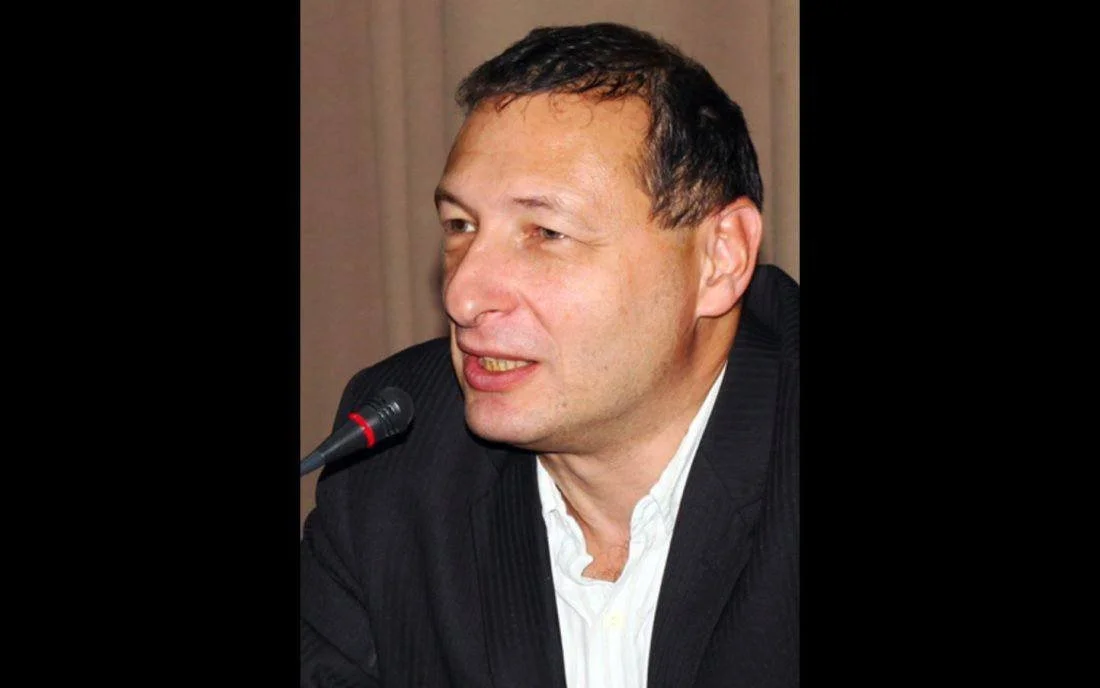
Statements from the KKE and allied outlets frame the 2023 arrest of Boris Kagarlitsky as a vague crackdown on “Marxist thinkers in Russia.” This framing is misleading.
Kagarlitsky is a long-time dissident and professional anti-communist whose political activity has consistently aligned with Western social-democratic currents. He was first arrested in 1982 for distributing illegal anti-communist publications as editor of Levy Povorot, a magazine that characterized the Soviet Union as an “authoritarian Stalinist regime.” He was released during the perestroika period and by 1990 had become an elected member of the Moscow City Soviet, where,to his credit; he opposed Yeltsin-era neoliberal “shock therapy.”
Kagarlitsky was again detained during the 1993 constitutional crisis and released shortly thereafter. In the early 2000s he founded the Institute for Globalization Studies, a social-democratic NGO that was officially designated a foreign agent in 2018. The organization has received substantial funding from the Rosa Luxemburg Foundation, a German political think tank tied to a Bundestag-funded party and, by extension, the German state.
In 2023, Kagarlitsky was arrested for using media platforms associated with this NGO to oppose Russia’s special military operation. While freedom of speech is rightly regarded as a core value in the United States, it is not for Americans to dictate how a country under active military and economic siege should regulate political activity. Russia is engaged in a struggle for its own sovereignty against NATO pressure, sanctions, and proxy warfare.
Under such conditions, it is neither surprising nor unreasonable that a figure with a long history of collaboration with Western institutions—operating an NGO funded by a NATO-aligned state—would be viewed as a security risk when using media platforms to mobilize opposition during wartime. Portraying this case as evidence that “Marxism has been criminalized” is false. The KKE and outlets such as Jacobin are not reporting facts; they are constructing a narrative.
The Ufa Case
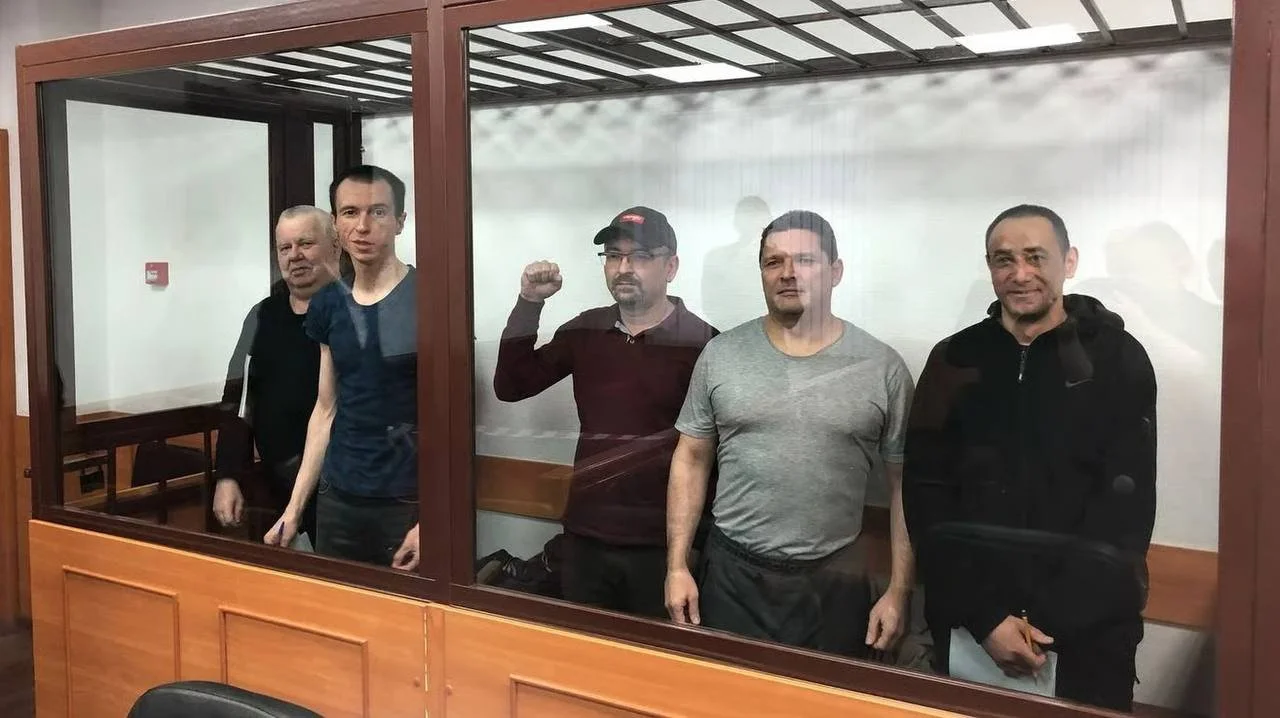
The second incident cited by the KKE concerns the arrest of five individuals in the city of Ufa, allegedly for organizing a Marxist study group. Rizospastis, the official newspaper of the KKE, claims the individuals were designated as terrorists “simply for studying the works of Vladimir Lenin.” English-language outlets sympathetic to this view have repeatedly attempted to conflate this case with that of Kagarlitsky, despite the two being entirely unrelated.
The facts tell a different story.
According to available reports, the group formed in 2016 and held regular meetings at a Stalin museum in Ufa. Several members had previously volunteered to fight Ukrainian forces in Donbas as part of pro-Russian militia formations. In February 2022—shortly after the launch of Russia’s special military operation—Sergei Sapozhnikov, himself a Donbas militia veteran, reported suspicious activity to the Federal Security Service.
Sapozhnikov alleged that group members had concluded that a violent revolution inside the Russian Federation was necessary and had begun discussing plans to overthrow the government. Subsequent searches of members’ homes reportedly uncovered weapons and explosives, including a shotgun and multiple high-powered grenades.
Claims that these individuals were arrested merely for reading State and Revolution or engaging in theoretical debate are demonstrably false. They were prosecuted for allegedly plotting an armed coup and were convicted by a military court. Whatever one’s political sympathies, this is not “criminalizing Marxism.”
Why Is the KKE Doing This?
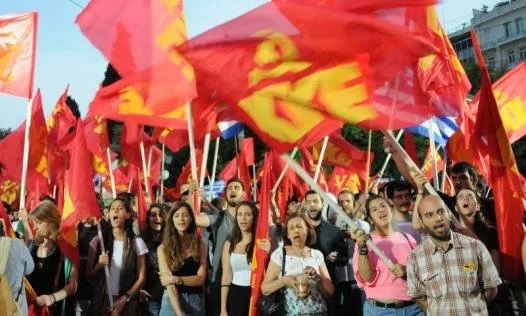
The KKE’s repeated dissemination of such misinformation reflects a longstanding pattern among certain “communist” organizations: cloaking a pro-imperialist posture in ultra-revolutionary rhetoric.
Officially, the KKE claims neutrality on the war in Ukraine, acknowledging NATO aggression while simultaneously condemning what it calls “Russia’s unilateral invasion.” It characterizes the conflict as an “inter-imperialist war” in which the working class supposedly has no stake.
There are two fundamental problems with this position. First, Russia does not meet Lenin’s criteria for an imperialist power. But even if one were to accept that characterization, the role played by the KKE remains deeply suspect. Greece is a member of both NATO and the European Union, and any “anti-imperialist” politics emerging from within that framework must be judged accordingly.
In a country whose ruling class is fully integrated into NATO’s war apparatus, adopting a posture of false equivalence and abstract pacifism objectively aids imperialism at home. By attacking Russia in order to appear “balanced” and respectable to EU institutions—while simultaneously acknowledging Ukrainian crimes—the KKE provides ideological cover for its own ruling class. It allows the establishment to say: even the communists agree that Russia is the problem.
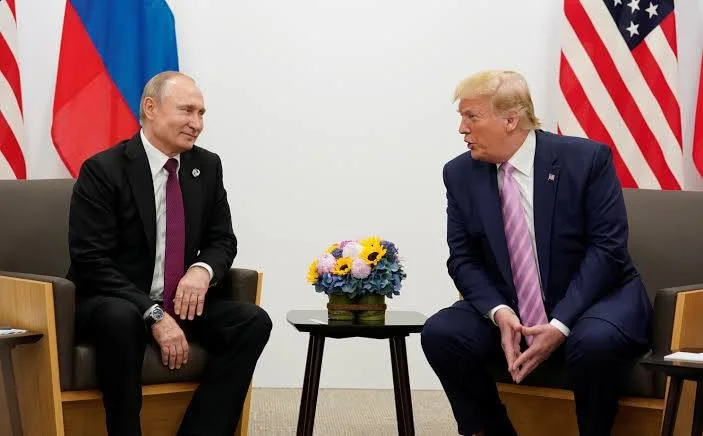
This context makes the sudden mass circulation of these two unrelated cases—years after the events themselves—particularly telling. At a moment when peace talks between the United States and Russia appear increasingly plausible, and when segments of the Western left are being mobilized against any deviation from the permanent-war consensus, allegations of supposed ideological repression in Russia serve a clear political function.
Having conceded that large portions of the public no longer trust mainstream institutions, the ruling class has increasingly relied on nominally dissident organizations to launder its narratives. The role played here by the KKE and aligned outlets is not one of principled internationalism, but of political accommodation—one that risks prolonging the war and the immense human suffering it has already produced.
This is opportunism, plain and simple.