Chicago PD Denies Permit for Victory Day Motorcade to Russian American community
by Noah Schenck
May 9th—-Victory Day, marks the anniversary of the allied victory over fascism in the Second World War. For many Americans it’s an event that often gets overshadowed by the Memorial Day festivities at the end of the month. But for the Russian people, who lost 27 million of their sons and daughters in the fight against Naziism, it is a deeply personal and patriotic holiday. In Chicago’s Russian-American Community, the date has been commemorated with an annual motorcade.
Adele, a Russian-American community activist, has long helped to organize the festivities, adorning vehicles with Russian, Soviet and American flags, and dawning St. George’s ribbon for the event. During the annual motorcade veterans of WW2 are honored both, in person and in-absentia through the “Immortal Regiment” where framed portraits of those who served are displayed by their relatives.
The endurance of the tradition through hardship and the cultural significance of the event made it all the more difficult when Chicago PD denied their permit request this year. The group had filed permit requests for May 2nd — a week prior to Victory Day which was denied on the grounds that too many other events had been organized that day. Adele says she checked the schedule and the excuse seemed legitimate. But when she filed a request to revise the date to Victory Day Chicago PD declined to give any reason whatsoever with Chicago Police Department Commander Christopher Bielfeldt “objecting to the request,”
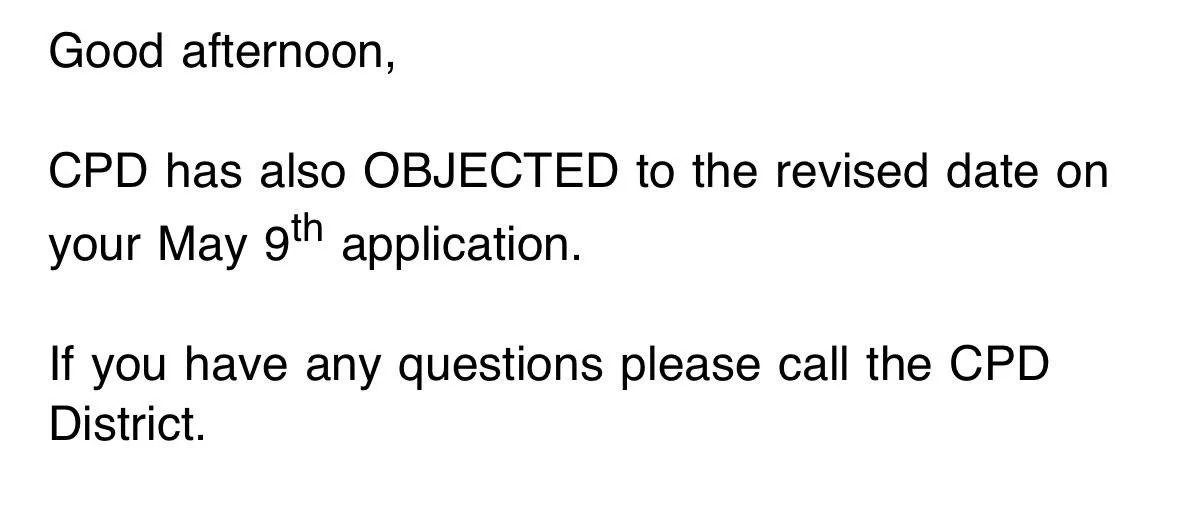
The decision left organizers heartbroken but understanding of resource constraints. As Adele stated:
“We understand that the city had many events taking place that day and limited resources available for escorts and coordination. At the same time, it was still very painful and disappointing for many members of our community that a peaceful memorial event dedicated to honoring World War II veterans could not move forward as planned.
For us, Victory Day is not about politics. It is about remembrance, gratitude, and preserving the memory of the enormous sacrifices made by millions of people during the war — including both Soviet and American soldiers, who once stood together as allies against Nazism.
Living in the United States, we sincerely try to preserve our history and culture with respect while promoting peace, historical memory, and the idea that tragedies like World War II should never happen again. That is why moments like this can feel especially difficult, because they leave many people feeling that this shared historical memory is not always given the recognition and care it deserves.”
Still in the context of both the global situation and the City of Chicago one can’t help but wonder if the decision was politically motivated. This year in spite of a US brokered 3-day ceasefire, set to coincide with Victory Day the Kyiv regime issued terroristic threats, aimed at Victory Day celebrations, attempting to antagonize Moscow. As a result Russia was forced to implement further security cautions and scale back their commemorative parade. Moreover the Ukrainian community in Chicago is one of the most outspoken and disruptive enclaves in the Midwest and have managed to rope Chicago PD into their shenanigans on more than one occasion.
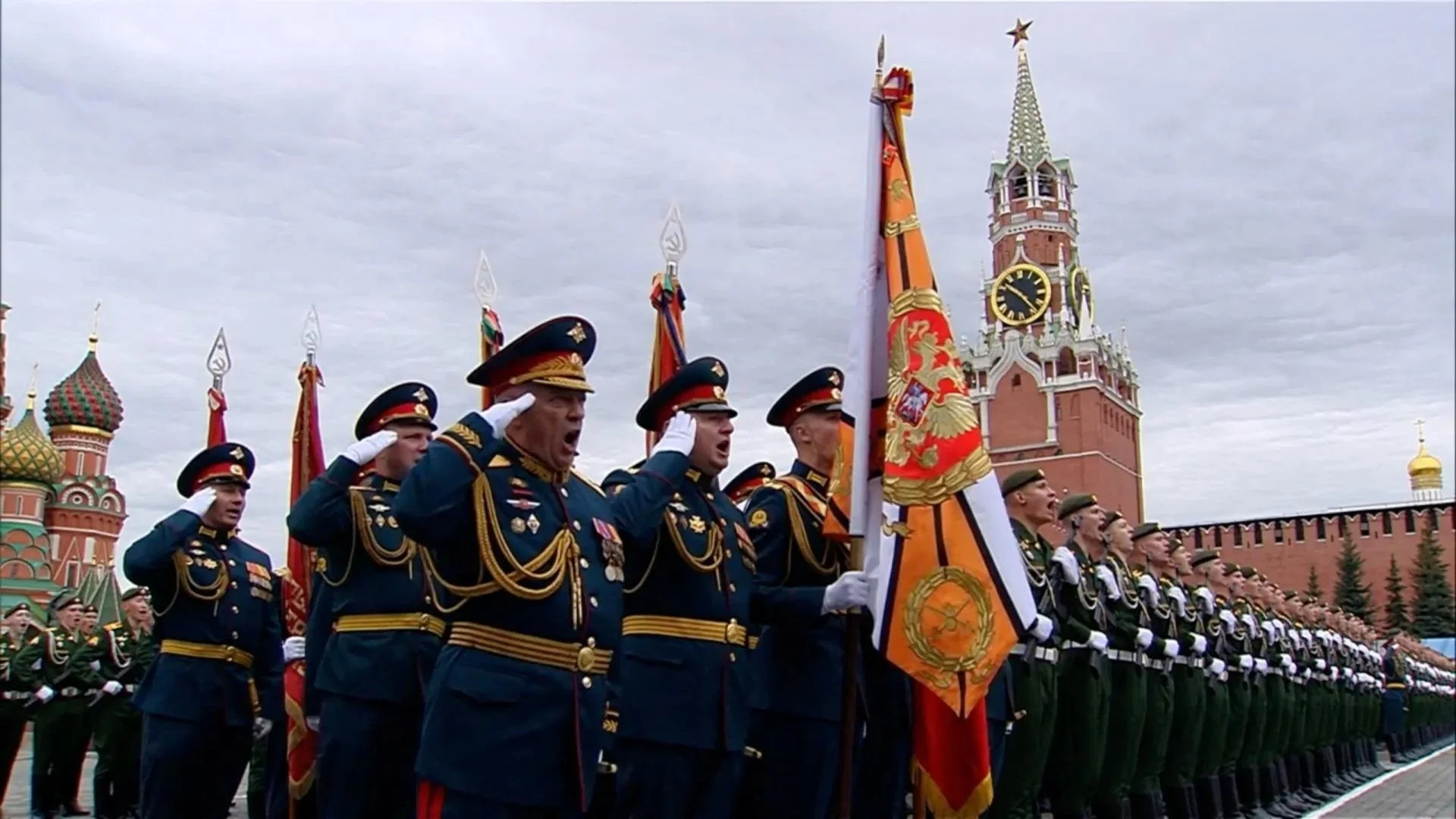
In 2014 a number of left-wing activist groups gathered in the Electrical Union Hall to discuss the then ongoing US-backed Maidan Coup and express their solidarity with the people of the Donbas under bombardment from the Kyiv regime. In response, 40 Ukrainian activists attempted to force their way into the building to disrupt the meeting and according to some reports even called the police in attempts to get the event shut down.
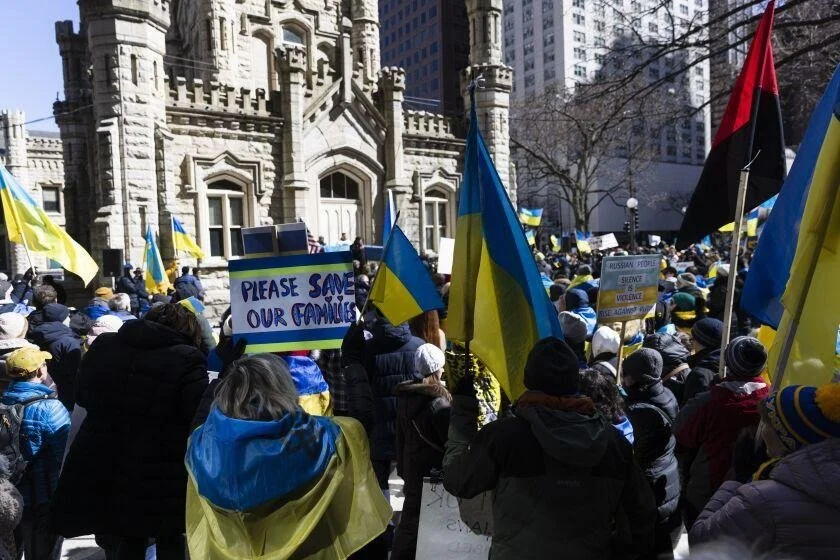
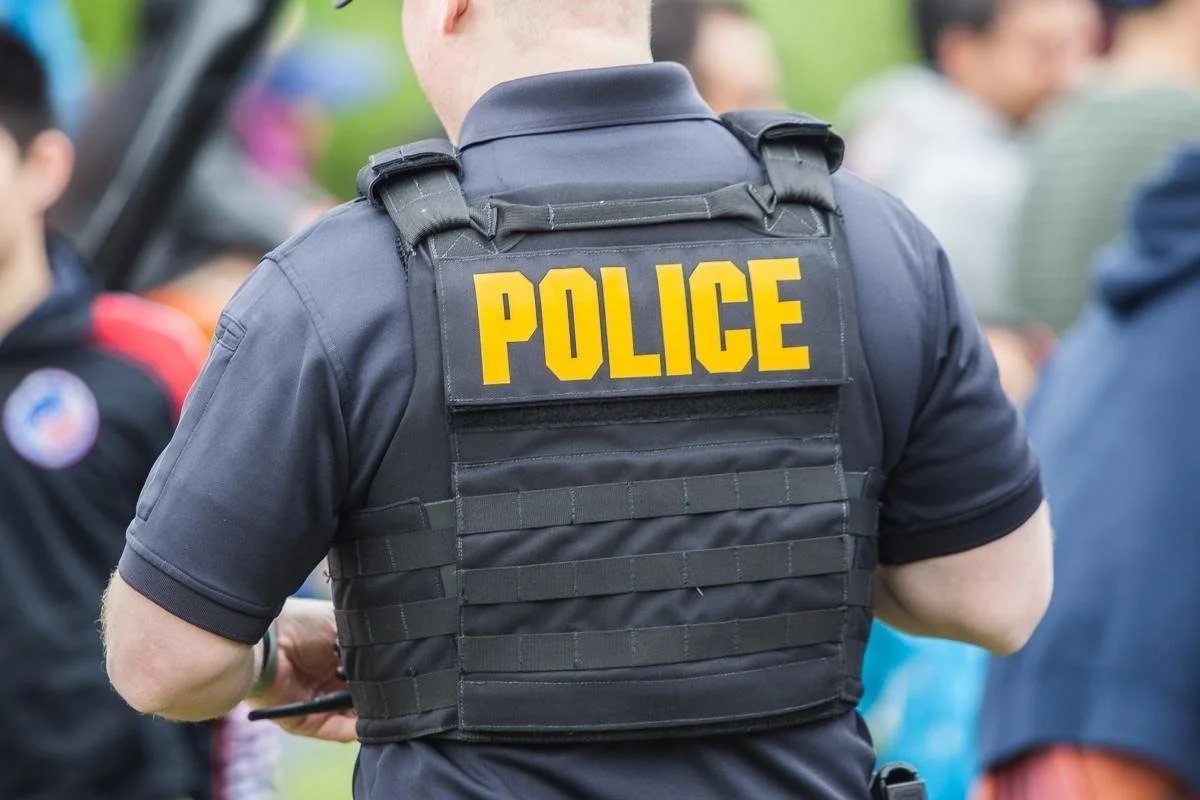
In 2022 when Russia launched its Special Military Operation, to defend the peoples of the eastern regions from NATO aggression, the Ukrainian community again became outspoken in their support for the Kyiv regime, holding fundraisers to send supplies to the Ukrainian military. Several districts of the Chicago Police Department as well as the surrounding suburbs contributed to the effort, wrapped up in the anti-Russian hysteria, donating nearly 200 Kevlar vests to Ukrainian forces. In addition Harrison Jozefowicz of the Chicago Police Department, became a local media spectacle by enlisting in the Ukrainian foreign legion and launching the non-profit Task Force Yankee, which aims to raise further money for weapons and “shepard volunteers to the front lines”.
In 2024 in another attempt to antagonize Russian-Americans, the Chicago wing of the Ukrainian World Congress, announced that members of the Ukrainian-American community in the area would be commemorating “Russian Shame Day,” on May 9th. And have since spent the holiday attempting to harass Russian-Americans, trying to celebrate the victory over fascism. In statements on their website the group claimed “We want to show that there is nothing to celebrate because all of Russia’s achievements are now associated with bloody crimes,” appearing to lament Nazi Germany’s defeat.
The concern, community members say, is that a vocal minority can influence institutional decisions, not necessarily through malice, but to avoid conflict, effectively sidelining a peaceful cultural commemoration.
The tremendous sacrifice of the Soviet People during the Second World War, is something far too often glossed over in the American memory of the conflict. What's more, the memory of the American people and the Soviet people standing arm and arm to defeat the spectre of fascism then haunting Europe and threatening to conquer the world is also fading from memory. Adele and the Russian-American community are Americans too, and their contribution to keeping that memory alive and to fostering understanding of their own traditions and experiences during such a crucial time for both our peoples, is something to be admired.
Incidents like this also highlight how Russophobic rhetoric promoted by both the main-stream-media and organizations like The Ukrainian World Congress can affect local communities and the manner in which they express their traditions. It also raises uncomfortable questions about the limits of multiculturalism, in a moribund empire.