2011: The Destruction of Libya, Key Moment for Innovationism
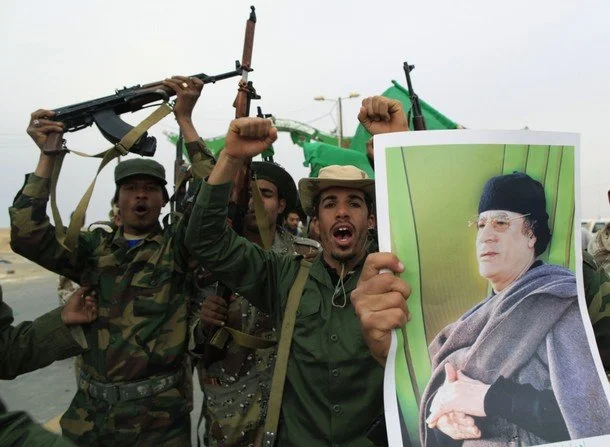
In retrospect, the NATO-led destruction of Libya in 2011 stands as a decisive turning point in the political development of Caleb Maupin and the emergence of what would later be called Innovationism.
At the time, Maupin was a leading anti-war and anti-racist organizer within the U.S. left, active in the Workers World Party (WWP) and deeply involved in organizing against police misconduct, racism, and U.S. military intervention. Having relocated to New York City in late 2010, he quickly became a visible figure around Occupy Wall Street and anti-imperialist activism.
The U.S.-NATO intervention against Libya forced him to confront the utter weakness and bankruptcy of the Communist and Socialist groups in America. After extensive study, Maupin viewed Gaddafi’s Libya as a state with socialist economic foundations: a nationalized economy, expansive social programs, major infrastructure projects such as the Great Man-Made River, and an explicitly anti-colonial foreign policy. Libya’s role in African development initiatives and its resistance to Western financial domination reinforced this view. Libya had the highest life expectancy in Africa. It had eliminated unemployment, illiteracy, and many of the other problems faced across the region. It had built the world’s largest irrigation system, the Great Man-Made River.
Most of the U.S. left celebrated the NATO-backed “revolution” that destroyed Libya, largely because Obama was president and the protests were framed as part of the so-called “Arab Spring.” Even groups like the Workers World Party, which technically opposed the intervention, dismissed Libya as merely a “bourgeois nationalist” state. Opposition to regime change was muted, cautious, and subordinated to liberal political trends. On May 11, 2011, Workers World newspaper wrote that the Libyan revolutionaries took power in 1969 “so they can better exploit their workers.”
Workers World Party leadership spent far more time internally maneuvering against Caleb Maupin than they did attempting to stop the destruction of an African nation by NATO. Fred Goldstein, Joyce Chediac, and others never offered a coherent ideological argument explaining why Libya was not a socialist country. Anyone could see that Libya had broken out of the globalist/imperialist system, established a revolutionary anti-colonial state and centrally planned its economy to have growth. Libya even had a network of “Popular Committees” much like the councils in the Russian Revolution or the Committees to Defend the Revolution in Cuba. WWP leadership's position ultimately boiled down to the claim that Gaddafi was an Islamic socialist rather than a Marxist-Leninist—as if the ideological labels used by leaders define economic reality, rather than actual property relations and material conditions.
Workers World Party did not organize a single act of civil disobedience in defense of Libya. Not one member of the organization was ever arrested standing against the war. Opposition to the bombing was restricted to a symbolic meeting at Riverside Church, a handful of UN press conferences, and other forms of meaningless political theater. Yet when it came time to oppose New York City Mayor Michael Bloomberg or the Tea Party, Workers World was suddenly prepared to fight, often echoing the rhetoric of MSNBC liberals like Rachel Maddow. Libya simply was not trendy enough among wealthy Williamsburg hipsters to become a cause worth real sacrifice.
Meanwhile, many libertarians and politically confused Alex Jones listeners expressed sympathy for Libya after watching RT or alternative media. Workers World Party showed no interest in engaging or recruiting them, dismissing them wholesale as “racist.”
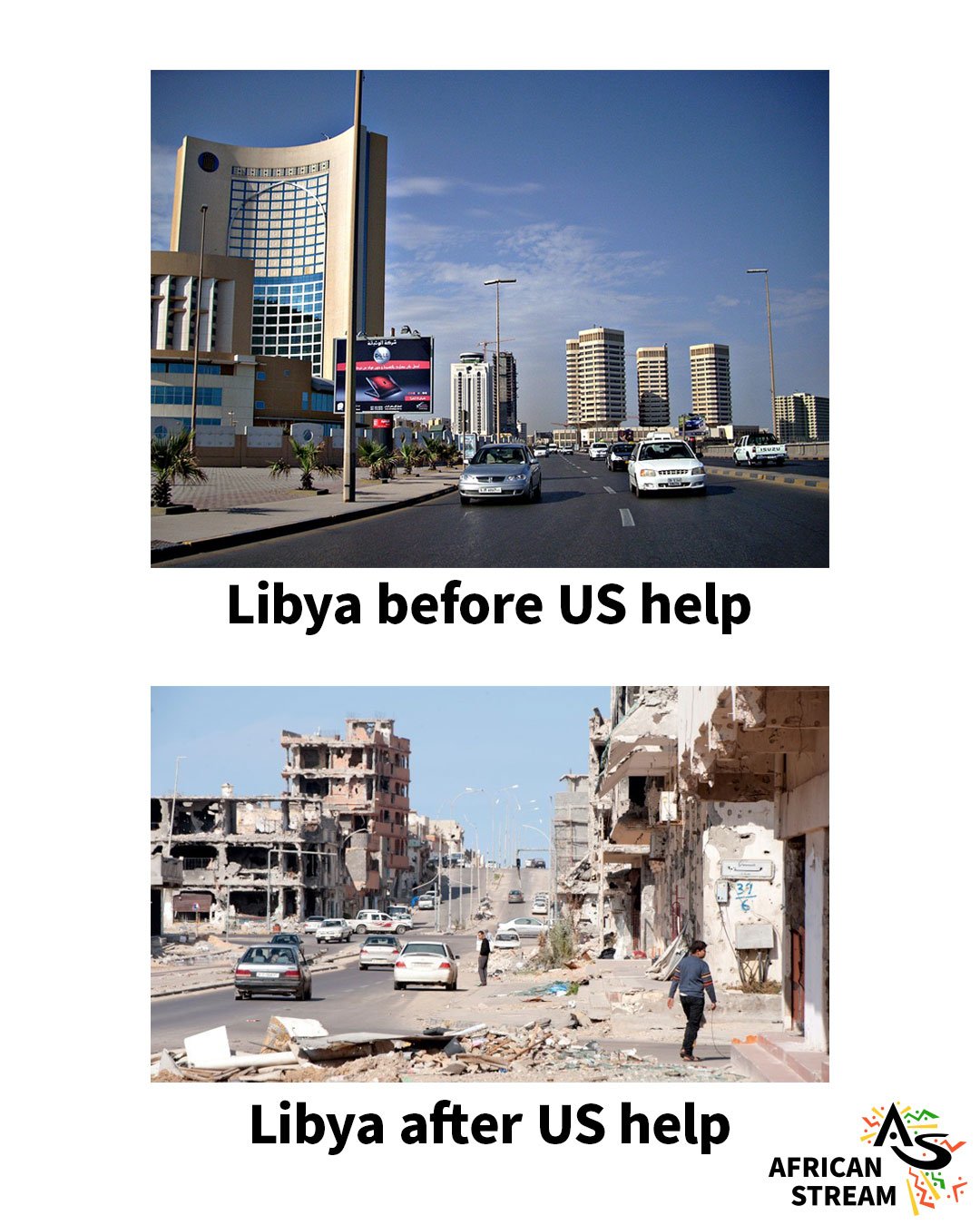
The consequences of the bombing and destruction of Libya are visible to the entire world: millions cast into poverty, the re-emergence of modern-day slave markets, and terrorist organizations establishing permanent footholds.
The betrayal of Libya ultimately pushed Caleb Maupin onto the path of developing a new understanding of anti-imperialism and the kind of movement required in the United States.
The first book ever published by the Center for Political Innovation was The Green Book, Gaddafi’s ideological text outlining the founding principles of Libya’s Islamic socialist society.
This article is an excerpt from a forthcoming Center for Political Innovation pamphlet entitled “Mossad’s War Against Caleb Maupin: How Biden’s FBI and Israel Tried to Destroy an Anti-Imperialist Voice… and Failed.”
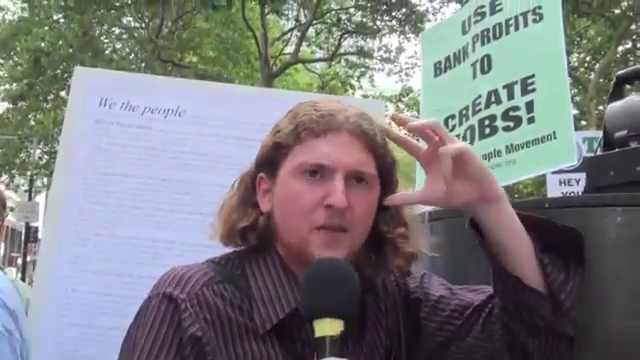
Caleb Maupin speaking on August 2nd, 2011, at the first “General Assembly” planning meeting of Occupy Wall Street in Bowling Green Plaza.
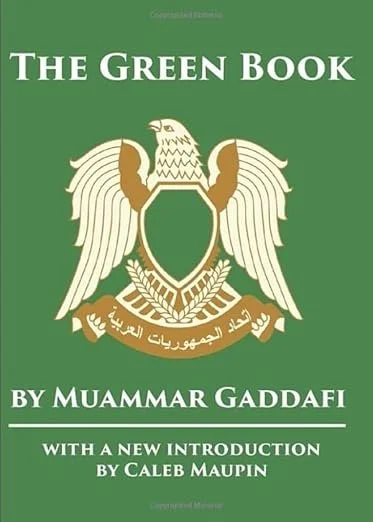
The first book the Center for Political Innovation ever published was a new edition of “The Green Book” by Muammar Gaddaffi, with a new introduction from Caleb Maupin.